
The Uncomfortable Truth Nobody in the Room Is Voicing
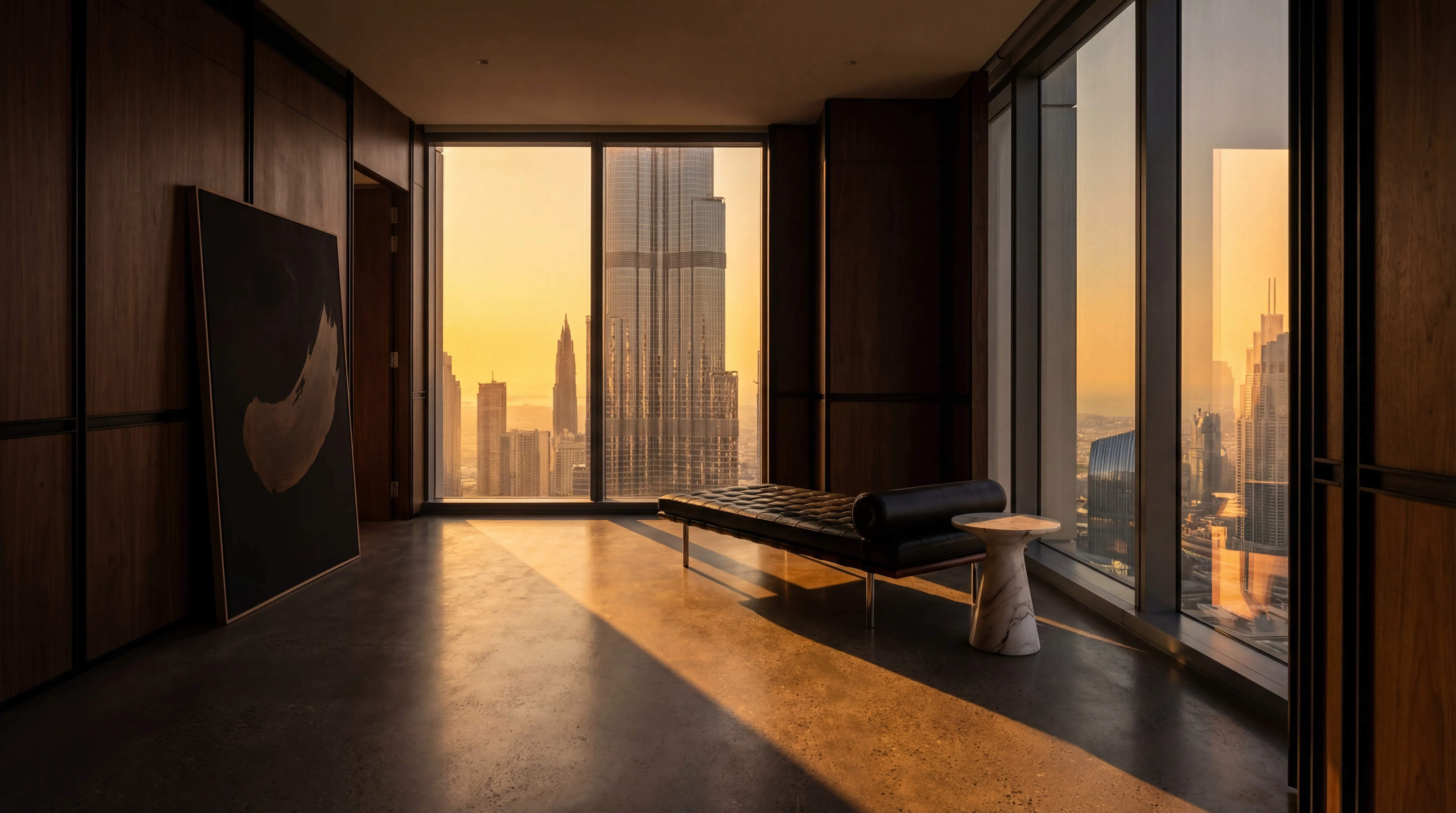
Walk into a luxury development showroom in Dubai, Miami, or London and you will notice the same thing every time. The materials are extraordinary. The renders are immaculate. The scale model under glass could pass for an art installation. Every surface has been considered, every sightline engineered to produce a specific feeling.
Then you pick up the brochure.
Generic headline. Stock photography of a couple smiling at a sunset. A logo that looks like it was designed in an afternoon and approved on a Friday. A tagline that could belong to any development in any city in any decade.
The building has a brand. The business selling it does not.
This is one of the most consistent and expensive disconnects in luxury real estate today. Developers spend millions creating physical environments that communicate taste, precision, and vision. Then they hand the brand to a marketing team with a tight deadline and a Canva account. The result is a gap so wide you could fit an entire sales floor inside it.
What a Building Actually Does
Architecture communicates before anyone says a word.
A well-designed building tells you about the values of the people who commissioned it. It signals ambition or restraint. It implies a type of buyer, a lifestyle, a set of priorities. The materiality alone, travertine versus concrete, brass versus chrome, creates an emotional shorthand that buyers process instantly and unconsciously.
This is brand strategy. It just happens to be expressed in cubic meters instead of pixels.
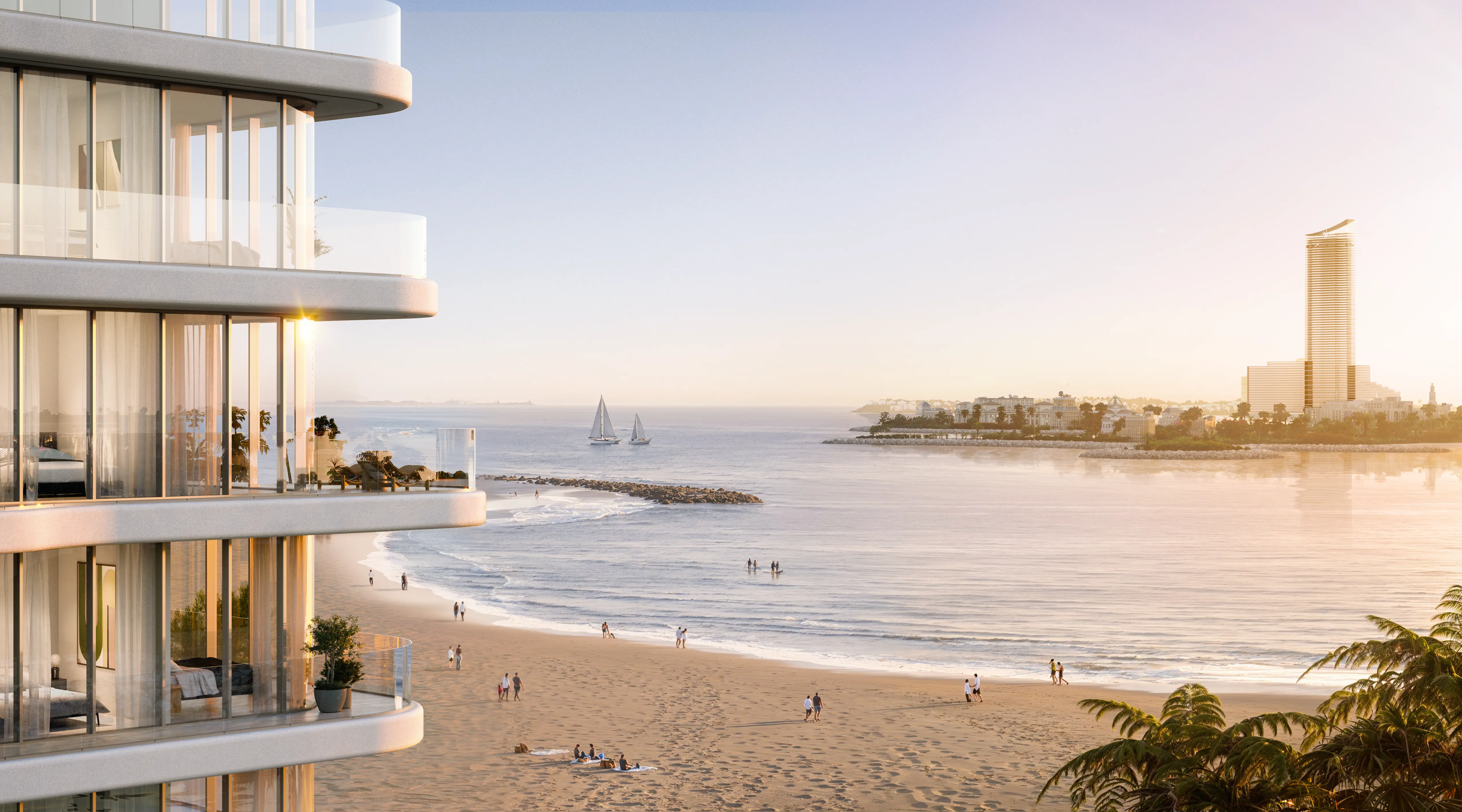
The best developers understand this intuitively. When Related Companies builds a tower, or when Emaar develops a waterfront district, the built environment carries a point of view that runs through every detail. The architecture is the brand in its most expensive, most permanent form.
The problem is that the brand rarely catches up.
The 33% That Is Being Left Behind
Here is the number that should be uncomfortable for every developer reading this.
Branded residences achieve a 33 percent average premium over comparable non-branded homes, and in resort destinations that premium climbs even higher. In Dubai, select branded residences have seen premiums of up to 90 percent over equivalent unbranded properties.
That premium is not being paid for better concrete. It is not being paid for a superior floor plan. It is being paid for a name. For a promise. For the trust that a brand has accumulated over years of consistent, recognizable, meaningful communication.
The branded residence sector has nearly tripled in ten years, growing from 323 projects in 2015 to approximately 910 by the close of 2025, with a further 837 contracted projects already in the pipeline through 2032.
The market is telling you something very clearly. Brand is not a finishing touch. It is a financial multiplier.
And yet the majority of developers, particularly mid-market and independent operators who cannot license a Four Seasons or attach an Armani, continue to treat brand as the last thing on the list. Something to sort out once the renders are approved.
The Gap Is Structural
The reason this happens is worth understanding, because it is not a failure of intelligence or ambition. It is a structural problem built into how the industry operates.
Real estate development is organized around the physical asset. The team that builds the building, architects, interior designers, landscape consultants, is typically engaged from day one. They shape the product during the phase when the most consequential decisions are made. What does this place stand for? Who is it for? What should it feel like to arrive here for the first time?
Brand strategy, if it enters the conversation at all, tends to arrive later. Often much later. By the time a strategist or creative studio is briefed, the product decisions are done. The brand is being asked to narrate a story that has already been written without it.
The result is a mismatch that buyers can feel even if they cannot name it. The building is speaking one language. The marketing is speaking another. And trust, which is the single most important thing a brand can build, quietly erodes.
What It Actually Means to Brand a Development
Branding a property is not naming it. It is not designing a logo and choosing a color palette. Those things matter, but they are outputs, not strategy.
Real brand work for a real estate development starts with a set of questions that most briefs never ask.
What is the organizing idea behind this place? Not the USP. Not the amenities list. The idea. The tension it resolves. The type of life it enables that could not be enabled anywhere else.
Who is the buyer beyond their demographic profile? What do they believe about themselves? What do they want to be true about their life in five years? What other brands have already earned their trust, and why?
Where does this development sit in the market, not just in terms of price per square foot, but in terms of cultural positioning? Is it for the buyer who wants to be seen, or the buyer who wants to disappear into quiet excellence? Those are not the same buyer, and they are not reached the same way.
These questions shape everything. The name. The visual language. The photography direction. The copy tone. The way the sales team is trained to speak. The events held during the soft launch. The materials chosen for the marketing suite.
Brand is the connective tissue that holds all of it together and makes it feel like a point of view rather than a collection of features.
The Brands Winning in This Market
The developers who are closing faster and commanding stronger prices right now have one thing in common. They treated brand as infrastructure, not decoration.
They started the brand conversation at the same time as the architectural brief. They appointed a creative studio at the point when strategic decisions were still being made, not after they were locked. They understood that the physical product and the brand identity needed to be built in conversation with each other, informed by the same research, shaped by the same vision.
The result is coherence. The building and the brand speak the same language. The buyer encounters a unified experience from the first digital touchpoint to the day they collect their keys. That coherence builds trust faster than any individual campaign can.
A building attached to a vague brand is just a building. A building attached to a clear and compelling brand identity becomes a destination, a status signal, a story worth telling.
The Question Worth Sitting With
If a potential buyer encountered your development brand with no photography, no renders, and no address, just the name, the logo, and the copy, would they feel anything?
Would they understand who this is for? Would they want to be that person?
Most honest answers to that question are uncomfortable.
The buildings are getting better. The brands are not keeping pace. And in a market where a name can command a 33 percent premium, the cost of that gap is not abstract.
It shows up in the final number on the sales report.
How CreativeCo Works With Developers
We specialize in brand strategy and identity for real estate developers, architecture firms, and luxury property concepts across the US, UAE, and the Middle East. We build brands that are designed to work from day one of the architectural process, not bolted on after the fact.
If you are in the early stages of a development and want to understand what a brand-first approach could mean for your project, let's talk.

Elisabetta Fanelli
CEO & Founder, CreativeCo.
6 min Read